Warehouse Deal | Apple iPhone 16 Pro Max – 512GB SSD


This guide compares the iPhone Duo, Samsung Galaxy Z Fold8 and Google Pixel 11 Pro Fold, focusing on the features that matter at work and which model best suits each business role.

These three foldables all promise the same headline trick: a bigger screen that folds away. However, they’re built on different foundations.
The iPhone Duo runs Apple’s A20 Pro and iOS, the Fold8 runs the Snapdragon 8 Elite Gen 5 and Android with Samsung’s Galaxy AI layered on top, and the Pixel runs Google’s own Tensor G6 with Gemini Intelligence built in.
That single choice of platform shapes everything that follows: which AI assistant does the heavy lifting and how well it fits alongside the rest of your fleet.
When leased through HardSoft, the Samsung Galaxy Z Fold8 starts from around £12.77 plus VAT per week, the Google Pixel 11 Pro Fold from £13.14 plus VAT per week, and the Apple iPhone Duo from £13.17 plus VAT per week.
With only a small difference between the advertised starting prices, platform compatibility and role suitability are likely to matter more than price for many organisations.
| Apple iPhone Duo | Samsung Galaxy Z Fold8 | Google Pixel 11 Pro Fold | ||
| Processor | A20 Pro chip | Snapdragon 8 Elite Gen 5 | Google Tensor G6 | |
| Dimensions when unfolded(H x W x D) | 4.6-inch x 6.5-inch x 0.2-inch | 4.9-inch x 6.4-inch x 0.2-inch | 6.1-inch x 5.9-inch x 0.2-inch | |
| Dimensions when folded (H x W x D) | 4.6-inch x 3.3-inch x 0.4-inch | 4.9-inch x 3.2-inch x 0.4-inch | 6.1-inch x 3.0-inchx 0.4-inch | |
| Weight | 254g | 201g | 239g | |
| Storage | 256GB / 512GB / 1TB / 2TB | 256GB / 512GB / 1TB | 256GB / 512GB / 1TB | |
| Inner Display | 7.6-inch OLED screen | 7.6-inch AMOLED 2Xscreen | 8.0-inch Super Actua Flex screen | |
| Outer Display | 5.4-inch OLED screen | 5.5-inch AMOLED 2X screen | 6.5-inch Super Actua screen | |
| Authentication | Touch ID | Fingerprint and face unlock | Fingerprint and face unlock | |
| AI Capability | Apple Intelligence and Siri AI | Galaxy AI | Gemini | |
| Leasing from (plus VAT per week) | £13.17 | £12.77 | £13.14 | |
The iPhone Duo is Apple’s first foldable iPhone, and for people who want the working space of a smaller iPad without carrying a second device, it’s a genuine two-in-one.
Performance. The A20 Pro pairs a 6-core CPU with a 7-core GPU and dual 16-core Neural Engine, backed by vapour cooling to keep things steady through sustained work. Siri AI can pull information from emails and notes and act inside supported apps (features and languages vary).
Memory. Storage starts at 256GB, rising to 512GB, 1TB and 2TB. 256GB is plenty if company files live in the cloud; go for 512GB or more if your people keep large project files offline, or if the phone needs to last a longer lease.
Connectivity. The Duo is eSIM only, which makes activating and managing plans simpler but rules out a physical SIM. USB-C is on board, and Emergency SOS and Roadside Assistance via satellite add reassurance for anyone working away from the office.
Display, battery and build. Opened, the 7.6-inch Super Retina XDR OLED display is 50% larger than the iPhone 18 Pro Max, this means more room for side-by-side apps and a wider on-screen keyboard. Grade 5 titanium, a protected hinge and a scratch-resistant inner finish add durability, and it’s water resistant too.


The dual-battery system reaches 50% charge in around 20 minutes with a compatible charger, and runs up to 31 hours of video on the inner display or 44 hours on the outer one. It’s worth remembering that the bigger screen costs more battery, so the outer display is the better call when runtime matters more than workspace.
The iPhone Duo can also sit partially folded in Seated Mode, turning one half into a built-in stand for video calls, presentations or watching content hands-free.
Note one trade-off: Touch ID is the only biometric sign-in — there’s no Face ID, so teams expecting it should factor that in.
At 201g, the Fold8 is unusually light for a foldable phone. It is built to stay comfortable in someone’s pocket or hand throughout a full working day, not just for the odd meeting.
Performance. The Snapdragon 8 Elite Gen 5 is built to keep demanding apps and Galaxy AI tools running smoothly, so multitasking and busy workloads don’t cause it to lag.
Memory. 12GB of memory comes as standard, with 256GB, 512GB or 1TB storage options. That’s a generous starting point for a phone and gives it the headroom to stay responsive over a longer lease.
Connectivity. Support for both a physical SIM and eSIM; this is useful for teams who need the flexibility of a physical card as well as digital plans.
Display, battery and build. A 5.5-inch cover screen in a tall 10:16 shape for quick tasks, opening out to a 7.6-inch, 4:3 main display with an anti-reflective finish for working on documents or apps side by side. A dual layer of Flex Titanium reinforces the shock-absorbing layer beneath the folding screen, with an Armor Aluminium frame and Corning Gorilla Glass adding further protection. The battery runs up to 26 hours of video playback.
Security. Business data can be encrypted and stored on-device using Knox Vault and KEEP, and users can choose whether supported Galaxy AI tasks run on the device or in the cloud. That provides extra control when your team handles confidential client, customer or company information.


The Google Pixel 11 Pro Fold is the pick for Google-first teams with Gemini and Google’s AI tools built in from the start, with the security credentials to back it up.
Performance. The all-new Google Tensor G6 provides up to 50% more TPU power, with around 20% better efficiency and roughly 15% faster app launching than the previous generation.
Memory. You get 16GB of memory as standard, plus the same choice of storage as the Galaxy Fold8: 256GB, 512GB or 1TB.
Connectivity. Like the iPhone Duo, the Google Fold is eSIM only, with satellite emergency services adding extra reassurance for people travelling or working away from reliable mobile coverage.
Display, battery and build. Open it up and you get an 8-inch Super Actua Flex OLED display. Tabletop mode lets you sit the phone partly folded on a desk, which is useful for hands-free video meetings. The battery is designed to run more than 24 hours of typical use and reaches 50% charge in around 30 minutes with a compatible wired charger.
Security. The Titan M3 security chip helps protect company information against digital attacks, and a built-in VPN adds protection when people connect away from the office. Call screening handles unknown callers before they interrupt the working day, and face unlock gives quick access to the phone.
For anyone leaning into the Apple ecosystem, the new Apple Watch Series 12 keeps notifications, health data and Apple Intelligence insights on the wrist, so your people aren’t unlocking the phone every few minutes. An Apple Pencil rounds it out, turning the unfolded Duo display into something you can actually annotate, sign or sketch on.
Add a wireless keyboard and mouse and your people can work from any desk. Between meetings, a Galaxy Watch keeps calls, alerts and health tracking on the wrist.
Google’s foldables suit people who spend the day between meetings and the road. A Pixel Watch handles quick replies, reminders and Gemini prompts, so the phone can stay in a pocket, while Pixel Buds give clean audio on calls and live translation when you’re working across languages.
And for the essentials, a USB-C charging cable and power adapter remain the one thing every team keeps asking for.


Whichever foldable your team ends up with – or if it’s a mix of all three – managing them at scale is just as important as choosing them. That’s where Shepherd, HardSoft’s own Mobile Device Management (MDM) service, comes in. An MDM service gives your IT team one place to set up devices, install work apps, apply security rules and protect or wipe company data remotely if a phone is lost or stolen.
We have three solutions designed to fit your business:
Shepherd Fusion manages each operating system from a single dashboard, so IT isn’t juggling three different platforms to keep devices secure, updated and compliant.
Whichever foldable ends up in someone’s hand, Shepherd means it’s managed the same way as everything else in your fleet.
| Role | Best Fit | Why |
| Admin, operations & reception | Standard iPhone/Android | Calls and email alone rarely justify the additional cost of a foldable phone – save your budget |
| Sales, account management & field teams | Duo or Fold8 | Side-by-side apps for CRM and email, wide keyboard for quotes on the move |
| Apple-first leadership & creatives | Duo | Apple Pencil annotation, Apple Watch and AirPods fit naturally into the same ecosystem |
| Android-first & lightweight carry | Fold8 | 201g keeps it wearable all day; physical SIM support for teams who still need it |
| Google-first & hybrid workers | Pixel 11 Pro Fold | Gemini Intelligence, tabletop mode for hands-free calls, strong on-device security |
| Confidential data & regulated roles | Pixel 11 Pro Fold or Fold8 | Titan M3 plus built-in VPN, or Knox Vault with on-device/cloud AI choice |
| Battery-first, all-day field use | Duo (outer display) or Pixel 11 Pro Fold | 44 hours on the Duo’s outer screen, 24+ hours typical use on the Pixel 11 Pro Fold |
The new foldable phones all carry premium price tags, and none of them come in under £1,000. If you’re considering equipping your team with these, that number adds up fast and eats into your budget quickly. That’s exactly where leasing helps.
Take the iPhone Duo: £1,999 upfront is a serious outlay, but with HardSoft leasing, that shrinks to £13.17 plus VAT per week. And we lease all three foldables, so your business has options depending on how your team actually works.
But with so many leasing companies out there, the question is: why HardSoft?
Here are just a few reasons:

There is no universal winner. The best foldable phone for your business is the model that fits your existing technology platform, security policies and everyday workflows.
Choose the iPhone Duo for an Apple-led environment, the Samsung Galaxy Z Fold8 for flexible Android productivity, or the Google Pixel 11 Pro Fold for Google Workspace teams seeking deeper Gemini integration. With only a small difference between the advertised starting lease prices, role suitability, security and manageability should carry more weight than price alone.
There is only 40p per week between the cheapest and most expensive phone, or £20.80 across a full year. The comparison is based on the advertised starting configurations and current lease pricing. Prices, configurations and availability may change.
At that level, buying on price alone makes little sense. Match each phone to the team that will get the most from it, even if that means using different models across different departments.
Lease the iPhone Duo from £13.17 plus VAT per week, the Galaxy Z Fold8 from £12.77 plus VAT per week, or the Google Pixel 11 Pro Fold from £13.14 plus VAT per week.
Speak to our team and we will help you build the right setup for your business.
Foldable phones can be valuable for employees who regularly work across email, CRM platforms, documents, presentations and video meetings while away from a desk. A conventional smartphone may remain more cost-effective for roles focused mainly on calls, messaging and email.
All three devices may provide access to Microsoft 365 applications. The best option will depend on the organisation’s identity platform, security requirements, mobile device management arrangements and existing device ecosystem.
Compatible foldable phones can be managed through supported mobile device management platforms. Available controls may include application deployment, security policies, compliance monitoring, configuration management and remote wiping.
Leasing can reduce upfront expenditure and make device refresh costs more predictable. Businesses should compare the total contract cost, support arrangements, flexibility and end-of-term options rather than evaluating the weekly price alone.

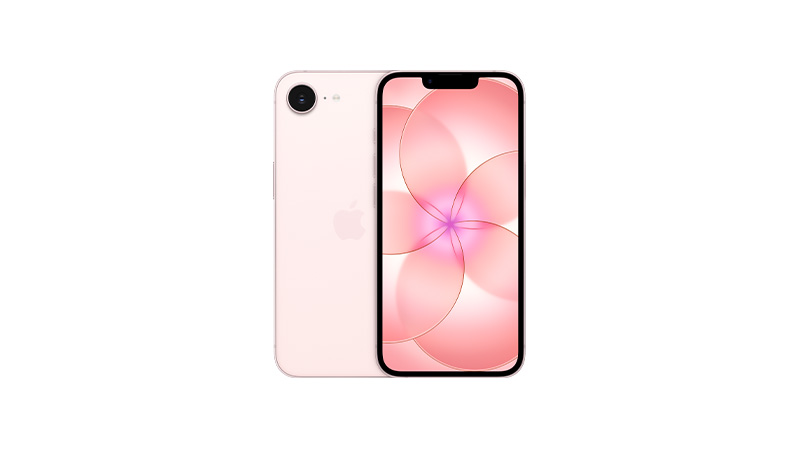
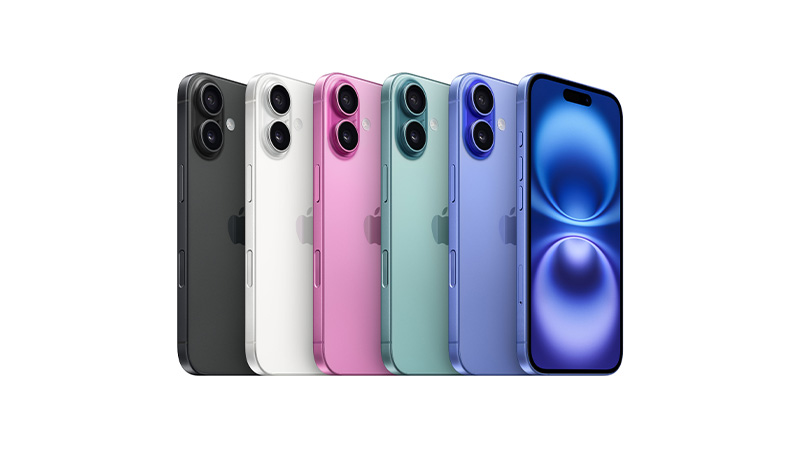
Discover the full range of Apple iPhones for business, including iPhone 16, iPhone Air, iPhone 17, iPhone 17e, and more. Designed for security, performance, and seamless collaboration, iPhones help teams stay productive wherever they work. Choose the right model and enjoy predictable monthly costs and expert support.
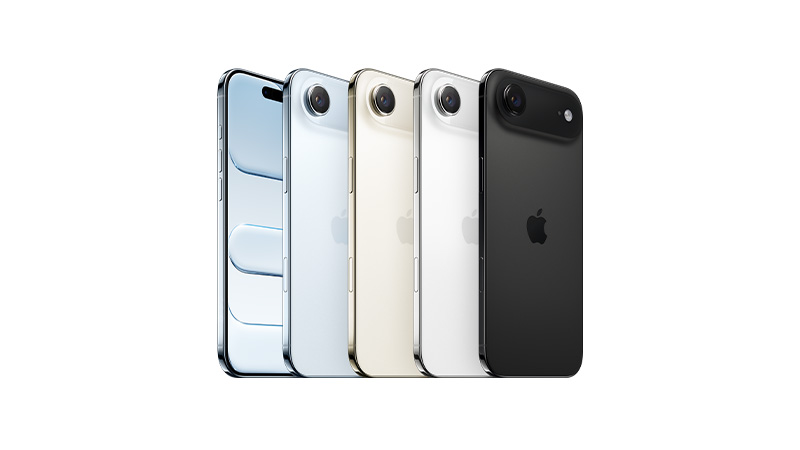






The MacBook Neo delivers lightweight portability with fast A18 performance, making it ideal for hybrid and mobile workforces. Its bright Retina display, all-day battery life, and built-in security give businesses a reliable, high-performance device for everyday creative, analytical, and collaborative tasks – wherever work happens. With 256GB or 512GB storage options, and a bundle of 5 available for teams, it's an affordable way to equip your workforce without comprising on reliability.


Is the Apple MacBook Neo right for your business?
The MacBook Neo offers a lower-cost entry point into Apple’s business hardware lineup. However, its capped RAM options and absence of certain higher-end features, such as additional ports, may make it less suitable for some roles. Read our full guide where we break down exactly which teams it suits and when you’re better off stepping up to the MacBook Air.
Why is the Apple MacBook Neo cheaper than other MacBook models?
The MacBook Neo uses the A18 Pro chip – originally designed for iPhones – rather than a Mac-specific M-series chip and drops features like MagSafe charging and Thunderbolt ports to hit its £699 starting price. It still runs full macOS and supports Apple Intelligence, making it a genuine budget Mac rather than a stripped-down alternative.
Does the Apple MacBook Neo support Apple Intelligence?
Yes, the MacBook Neo is built for Apple Intelligence and ships with it enabled out of the box, despite its lower price point.
Does the Apple MacBook Neo have touch ID?
Touch ID is included with most MacBook Neo configurations, though the entry-level base model omits it. Buyers who want fingerprint sign-in should check the specific configurations before ordering.
What ports are available on the Apple MacBook Neo?
The MacBook Neo features two USB-C ports rather than Thunderbolt. One supports USB 3 speeds of up to 10Gb/s and doubles as the display output, while the other is limited to USB 2 speeds of up to 480Mb/s and is best used to charging or low-speed accessories. It also includes a 3.5mm headphone jack, but lacks a MagSafe charging port.








Apple’s most affordable laptop in over a decade — the MacBook Neo — is designed to make Mac ownership more accessible than ever before. This guide breaks down what the Neo offers, who it’s perfect for, who it isn’t right for, and how it compares to older MacBook Air models.
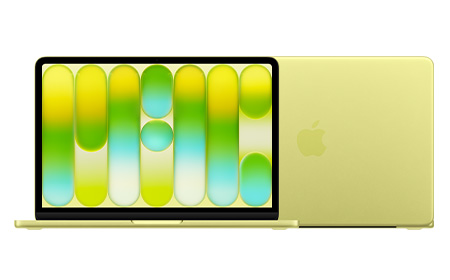
The MacBook Neo is Apple’s new entry‑level MacBook, powered by the A18 Pro chip, the same generation of silicon used in the iPhone 16 series.
The Neo features a 13-inch Liquid Retina display with 500 nits brightness and support for one billion colours — making it vibrant enough for study, shopping, streaming and casual creative work.
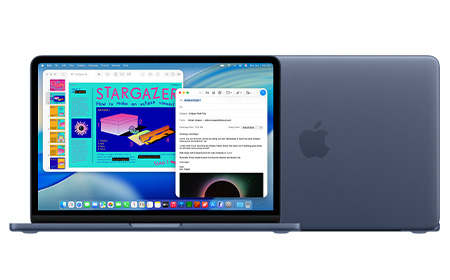
The machine comes in four colours, Silver, Blush, Citrus and Indigo, giving it the most playful and consumer-friendly aesthetic in Apple’s lineup.
A18 Pro Chip. The A18 Pro offers a 6‑core CPU, 5‑core GPU and a 16‑core Neural Engine, giving the Neo enough power for email, schoolwork, office apps, browsing, video calls, streaming and light creative tasks. It also supports Apple Intelligence features.
8GB RAM (Fixed) & 256GB/512GB SSD. The Neo comes with 8GB unified memory and either 256GB or 512GB SSD, with Touch ID available only on the 512GB model. It’s ideal for students and everyday users, though not suited to heavy multitasking or pro workflows.
Strong Battery Life. The Neo delivers up to 16 hours of video playback, allowing all‑day working or studying without needing the charger.
Lightweight With a Premium Aluminium Build. At 2.7 pounds (1.23kg), the Neo weighs the same as a 13-inch MacBook Air and keeps Apple’s signature durable aluminium chassis.
Connectivity. The MacBook Neo includes two USB‑C ports (one USB 3 and one USB 2), plus a headphone jack.
Students who need a reliable laptop for research, essays, online learning and video calls.
Families & casual users who want a Mac for browsing, email, shopping, photo organisation and entertainment.
First‑time Mac buyers who want the Apple ecosystem at the lowest cost.
Small business users who need a dependable low-cost device for admin, bookkeeping, scheduling and cloud‑based workflows.
The MacBook Neo is NOT ideal for:
For these users, the M5 MacBook Air or M5/M5 Pro/M5 Max MacBook Pro is a much better fit.
| Feature | MacBook Neo (A18 Pro) | MacBook Air M1 | MacBook Air M2 |
|---|---|---|---|
| CPU | A18 Pro, 6-core | M1, 8-core | M2, 8-core |
| GPU | 5-core GPU | 7- or 8-core | 8- or 10-core |
| Memory | 8GB (fixed) | Up to 16GB | Up to 24GB |
| Storage | 256GB / 512GB | Up to 2TB | Up to 2TB |
| Battery Life | Up to 16 hours | Up to 18 hours | Up to 18 hours |
| Display | 13" Liquid Retina (500 nits) | 13.3" Retina | 13.6" Liquid Retina |
| Weight | 1.23kg | 1.29kg | 1.24kg |
The MacBook Neo is the most accessible way to enter the Mac ecosystem, combining a colourful design, excellent battery life and capable everyday performance — all at a breakthrough price. It’s not a replacement for the MacBook Air or Pro if you need serious power, but for students and everyday users, it delivers outstanding value.


Apple offer three different ranges of laptops, the MacBook Pro, the MacBook Air, and the MacBook Neo.

Lighter and more portable. The MacBook Air remains Apple’s lightest, most portable laptop, available in both 13‑inch and 15‑inch sizes. It’s ideal for users who value portability above everything else.
Now powered by M5 chips. The new MacBook Air models are equipped with Apple’s M5 processor, featuring a 10‑core CPU and up to a 10‑core GPU with Neural Accelerators in each core. This delivers up to 4× faster AI performance compared to the M4 Air, along with stronger graphics and multitasking capabilities.
Considerable upgrades. Apple has doubled the base storage and RAM for the M5 Air. Models now start at 16GB unified memory and a 512GB SSD, with configurations available up to 32GB RAM and 4TB SSD. The SSD also delivers 2× faster read/write speeds than the previous generation.
Long battery life. Despite the performance boost, the M5 Air still delivers up to 18 hours of video playback and up to 15 hours of wireless web use, ideal for long working days without needing to plug in.
More affordable than it looks. While the starting price has increased to $1,099, the M5 Air now includes 16GB RAM and a 512GB SSD as standard, making it better value than the previous M4 generation, which required upgrades to reach similar specs.
Great for on‑the‑go professionals. With its silent fanless design, lightweight build, long battery life, and faster AI‑ready performance, the M5 MacBook Air is perfect for students, frequent travellers, hybrid workers, and professionals prioritising portability.
Larger screens. The MacBook Pro is available in 14‑inch and 16‑inch sizes, offering larger displays and more workspace than the MacBook Air.
M5, M5 Pro and M5 Max chips. The latest MacBook Pro models now use Apple’s M5 chip family, including M5 Pro and M5 Max, which deliver major gains in CPU and GPU performance, AI acceleration, and memory bandwidth compared to previous generations.
Increased upgrades. MacBook Pro supports far higher configurations than the Air, with options up to 128GB unified memory and up to 8TB SSD depending on the model.
Longer battery life. Battery performance remains strong, with the 14- and 16‑inch models lasting up to 16-22 hours.
Higher cost. Due to its enhanced performance, the MacBook Pro generally comes at a higher price compared to the MacBook Air.
Great for high-end creatives. MacBook Pro is ideal for creatives, developers, and professionals who need reliable, high‑spec performance for demanding tasks such as video editing, 3D rendering and software development.
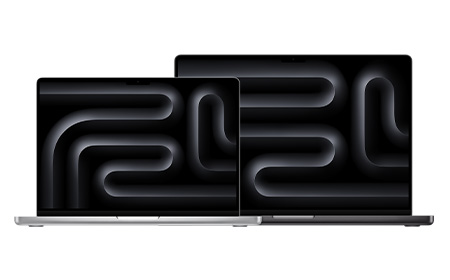
Smaller 13-inch size. MacBook Neo comes in a single 13-inch form factor, offering a compact and lightweight design similar in footprint to the MacBook Air, but positioned as Apple’s most accessible laptop.
A18 Pro chip. Unlike the Air and Pro models, the MacBook Neo uses Apple’s A18 Pro chip — the same architecture used in the latest iPhone — delivering fast performance for everyday tasks, studying and light creative work, while keeping costs low.
More limited upgrades. To maintain its lower price point, MacBook Neo offers more modest upgrade options, with 8GB unified memory and 256GB or 512GB SSD configurations. Touch ID is only available on the 512GB model.
Long battery life. Despite its entry-level positioning, MacBook Neo provides up to 16 hours of battery life, making it highly capable for school, work, and travel.
Most affordable MacBook. Neo is Apple’s most affordable laptop ever, designed to compete directly with Chromebooks and entry-level Windows devices. A 512GB version with Touch ID is available for an increased price.
Great for students and first‑time Mac users. MacBook Neo is ideal for students, families, and new Mac owners who want a reliable Apple laptop for everyday work, studying, web browsing, and entertainment — all at a price far below the Air and Pro ranges.
| Device | Screen Size | Battery Life | Weight | Processor |
|---|---|---|---|---|
| MacBook Neo | 13" | Up to 16 hours | 1.23kg | A18 Pro |
| MacBook Air | 13" or 15" | Up to 18 hours | 1.23kg to 1.51kg | M5 |
| MacBook Pro | 14" or 16" | Up to 24 hours | 1.5kg to 2.1kg | M5 / M5 Pro / M5 Max |
Apple now offer three ranges of laptop: the MacBook Air, MacBook Pro, and the new MacBook Neo.
MacBook Pro models come in 14″ and 16″ sizes and remain the best choice for creative professionals and users with demanding, data‑intensive workloads, thanks to the power of the M5, M5 Pro and M5 Max chips.
MacBook Air is available in 13″ and 15″ sizes and is ideal for on‑the‑go professionals and everyday use, now offering the M5 chip, long battery life, and a lightweight, portable design.
MacBook Neo sits below the Air as Apple’s most affordable laptop, featuring a 13″ display and the A18 Pro chip. It’s designed for students, families, and first‑time Mac users who need a reliable everyday laptop at a much lower price point.


This guide compares the MacBook Neo and the MacBook Air M5 for business teams — what each one offers, the specs that actually matter at work, and how to match the right machine to the right role.

These are Apple’s two most affordable laptops but they’re built on different foundations.
The Neo runs an A-series chip — the same A18 Pro found in the iPhone — while the Air runs Apple’s M5 silicon. That single difference shapes everything: memory, connectivity, and how each machine copes with a heavy day’s work.
On leasing, the Neo starts from around £3.72 +VAT per week and the Air from £6.91 — so the Neo is close to half the cost. But cost is only half the decision. The rest comes down to what your people actually do all day.
Let’s look at each machine on its own terms.
| Feature | MacBook Neo | MacBook Air M5 |
|---|---|---|
| Chip | Apple A18 Pro (iPhone-class) | Apple M5 |
| CPU / GPU | 6-core / 5-core | 10-core / up to 10-core |
| Memory | 8GB unified (fixed) | 16GB base, up to 32GB |
| Base storage | 256GB or 512GB | 512GB or 1TB |
| Display | 13″ Liquid Retina, 500 nits | 13.6″ or 15.3″ Liquid Retina |
| Ports | 1× USB-C 10Gbps + 1× USB 2.0 | Thunderbolt 4 + MagSafe |
| External displays | One 4K @ 60Hz | Multiple |
| Touch ID | 512GB model only | Yes |
| Battery | Up to 16 hours | Up to 18 hours |
| Sizes | 13″ only | 13″ and 15″ |
| Starting price (Apple) | From £699 | From £1,299 |
| Leasing from HardSoft | From ~£3.72/week | From ~£6.91/week |
The Neo is the most affordable Mac Apple has ever made, and for a large slice of any workforce it’s all the laptop they need.
Performance. The A18 Pro pairs a 6-core CPU with a 5-core GPU and a 16-core Neural Engine, with Apple Intelligence built in. It flies through the everyday: email, Microsoft 365 and Google Workspace, web-based CRMs, video calls and general multitasking. It’s a phone-class chip, so it’s not built for sustained heavy lifting — but most business roles never ask it to.
Memory. The Neo has 8GB of unified memory, with no option to add more now or later. That’s comfortable for someone living in a couple of apps and a handful of tabs. However, if you push it with dozens of tabs plus several apps at once, it starts to feel tight. See How Much RAM Should You Order in Your Next Mac? for why this matters over a multi-year lease.
Connectivity. Two USB-C ports (one fast 10Gbps, one basic USB 2.0), Wi-Fi 6E, and support for one external 4K display. There’s no Thunderbolt, so a busy dual-monitor dock is out of the box — though a USB-C dock solves most of that (more below).
Display, battery and build. A bright 13″ Liquid Retina screen (500 nits, a billion colours), up to 16 hours of battery, a silent fanless design, and four colours to choose from. Note two trade-offs: Touch ID is only on the 512GB model, and there’s no backlit keyboard or fast charging.

The Air is the default “everyday professional” Mac — noticeably more capable under the hood, and built to stay comfortable across a longer lease.
Performance. The M5 steps up to a 10-core CPU, up to a 10-core GPU, and more than twice the Neo’s memory bandwidth. That headroom is what keeps things smooth when the workload is sustained — heavy multitasking, larger datasets, creative apps, and anything that runs hard for long stretches without slowing down.
Memory. The Air starts at 16GB and configures up to 32GB. On Apple Silicon, memory is the single biggest factor in how well a machine ages, so this is the spec that most justifies the extra weekly cost for demanding roles — and the main reason not to under-spec someone you’re equipping for three years.
Connectivity. Thunderbolt 4 plus MagSafe charging, and support for multiple external displays. This is the practical difference for desk-based staff: full docking, faster peripherals, and a proper multi-monitor setup from a single connection.
Display, battery and build. A choice of 13.6″ or 15.3″ Liquid Retina — useful when someone wants more screen without moving up to a MacBook Pro — plus up to 18 hours of battery, a backlit keyboard, fast charging, and Touch ID as standard.
Both machines make great desk workstations with the right accessories — and you can easily add these to any lease with HardSoft.
A USB-C or Thunderbolt docking station turns a single laptop port into a full desk, complete with an external display, wired network, and charging.
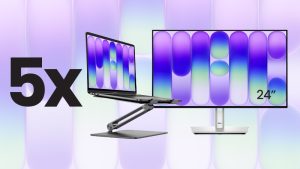
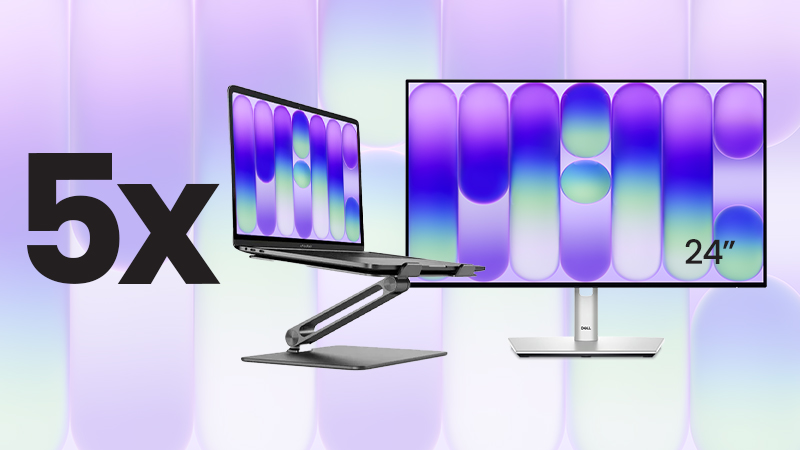
For teams standardising on the Neo, we’ve packaged it up: the MacBook Neo Desktop Bundle pairs five 512GB Neos (with Touch ID) with Dell 24″ USB-C hub monitors and Alogic stands that lift the screen and help airflow on the fanless chassis. That’s five complete workstations for £39 +VAT per week (around £7.80 a desk).
| Role | Best Fit | Why |
|---|---|---|
| Admin, operations & reception | Neo | Email, 365/Workspace, web CRMs — smooth, silent, cost-effective |
| Frontline, field & retail | Neo | Point-of-sale, scheduling, a browser — no headroom wasted |
| New starters & second devices | Neo | Fast, affordable and easy to deploy at scale |
| Sales, account management & leadership | Air | All-day calls, presentations and endless tabs fill 8GB fast |
| Marketing | Split | Neo for writers and social; Air for designers and heavier creative |
| Design, development & power users | Air (min.) | Adobe, IDEs, Docker and simulators need M5 and 16GB+ |
Bought outright, the Neo (£699) and the Air (£1,299+) are £600 apart per person — a gap that grew after Apple’s June 2026 price rises. Spread across a lease, the gap is about £3.19 a week per device. Leasing makes the price gap small enough to choose each laptop for the job, not the price tag.
Leasing keeps a mixed rollout simple:
For a typical team, the Neo is the smart, cost-effective choice — admin, reception, frontline, retail and single-app roles, and with a dock or the Desktop Bundle it makes an excellent office workstation too.
For the people who multitask heavily, work docked across multiple monitors, or run creative and development tools, the Air’s M5 chip, 16GB+ memory and Thunderbolt aren’t a luxury — they’re what keeps those roles productive across the life of the lease.
So it’s rarely “Neo or Air” for the whole business. The best answer is usually both, matched to how each person works — and because leasing narrows the cost gap to a few pounds a week, that mix is easy to build and easy to adjust as your team changes.
Lease the Neo from under £4 a week, or the Air from under £7. Speak to our team to map the right setup for your business.

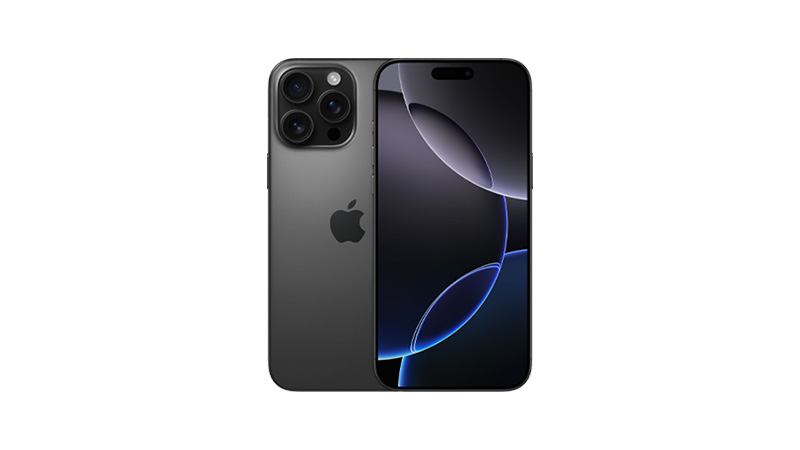
Give your team the phones they actually want to use — from the latest iPhones to Samsung, Google Pixel, and Fairphone devices. One monthly payment, no upfront costs, and complete flexibility to upgrade or scale. Built for security, manageability, and modern work.