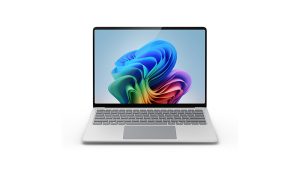
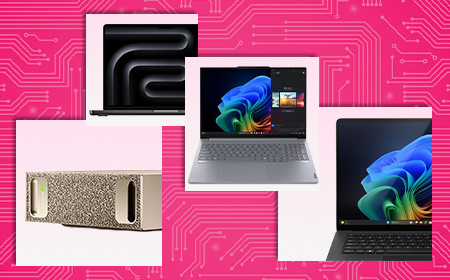
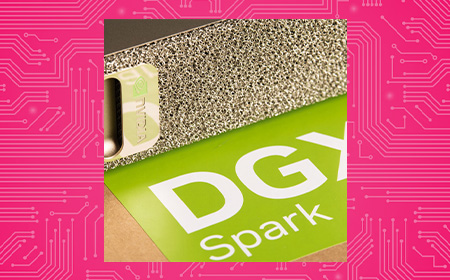
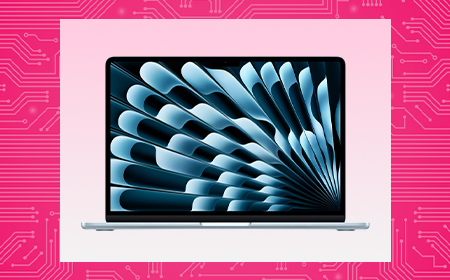
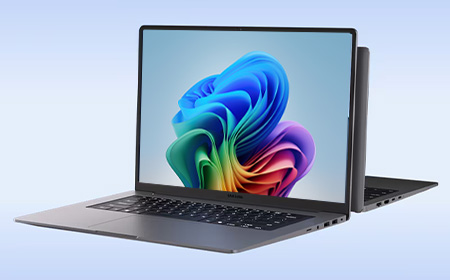
Discover AI supercomputer laptops from Microsoft Surface, Apple, ASUS, MSI, Dell, Lenovo and HP. Featuring NVIDIA RTX Spark and up to 128GB unified memory, they’re built for on-device AI, machine learning and demanding professional workloads, with flexible monthly leasing and no large upfront cost.
Run AI locally with faster performance and lower costs.
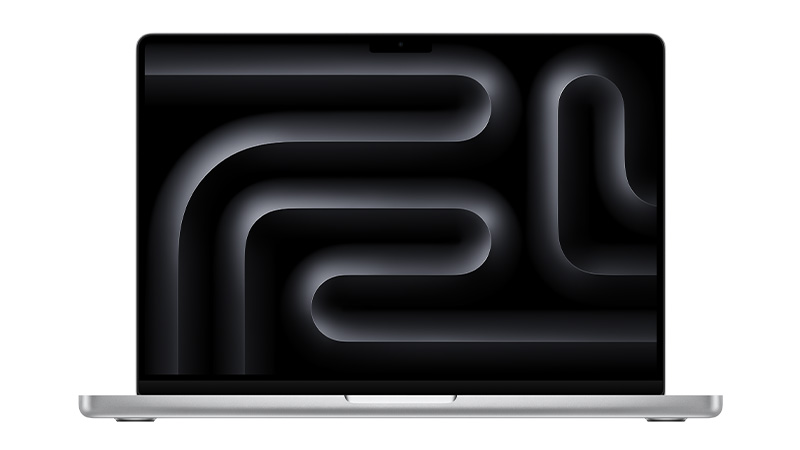
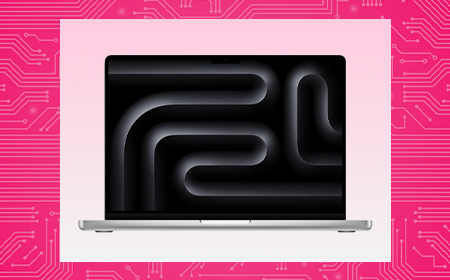
Bring exceptional visuals and powerful performance to your business with MacBook Pro with PROLED XDR Display. Its tandem OLED technology delivers up to 2,000 nits peak brightness, a 10,000,000:1 contrast ratio and wide P3 and Adobe RGB colour for precision across creative and professional workflows. Touch is built directly into the display, letting users scroll, zoom, draw and interact naturally with their work onscreen.
Advanced PROLED XDR display with Touch, incredible brightness, deep blacks and outstanding colour accuracy.
Yes, for users who need serious processing power for tasks like video editing and software development, the MacBook Pro’s faster chips, brighter display and longer battery life justify the higher price. Casual or everyday users may find a MacBook Air or MacBook Neo more cost-effective.
Do Older MacBook Pro Models Still Offer Good Value?
Older MacBook Pro models (M1-M3) still perform well for everyday business tasks and can offer excellent value, especially refurbished. However, buyers should check remaining software update support and battery health before making a purchase.
Why is an Apple MacBook Air cheaper than a MacBook Pro?
The Air is built for everyday portability: light, silent, no fan, because typical use never generates enough heat to need one. The Pro exists for sustained heavy workloads like video rendering or compiling, where active cooling, stronger chips, and better displays let it keep performing under pressure instead of throttling.
What is the lifespan of an Apple MacBook Pro?
A MacBook Pro typically lasts 5-7 years with regular use, supported by Apple’s long-term software updates. Battery health and storage needs are usually the first factors to prompt an upgrade rather than outright failure.
Who is the Apple MacBook Pro Best Suited For?
The MacBook Pro suits professionals with demanding workloads – developers, designers, video editors and data analysts – who need sustained high performance. It’s less necessary for users whose day-to-day work is primarily focused on administrative tasks.
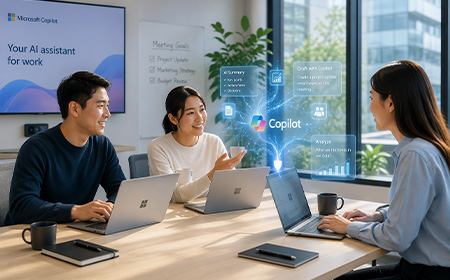
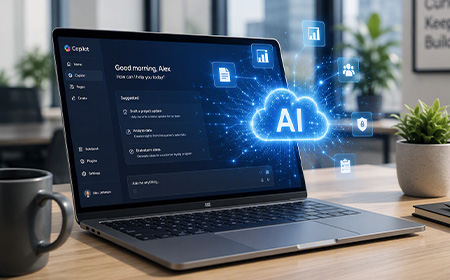
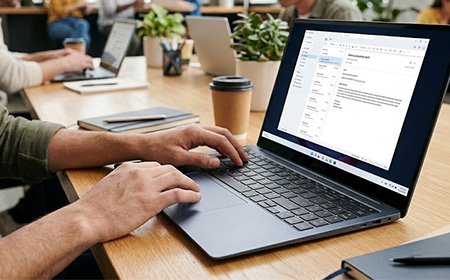
Microsoft Copilot helps your team work faster by bringing AI-powered assistance to Word, Excel, PowerPoint, Outlook and Teams. Create, analyse and collaborate more efficiently with tools you already use every day.
Create documents, emails and presentations faster with AI.
Most users replace a MacBook Air every 5-7 years, once performance no longer keeps pace with software demands or battery capacity has noticeably declined. Business users with longer refresh cycles can often extend this further with good care.
What Amount of RAM Is Recommended for a MacBook Air?
16GB of RAM is a sensible baseline for most users doing everyday office work and multitasking, while 8GB is only recommended for very light, single-app use. Since RAM can’t be upgraded later, it’s worth buying more than you think you need.
What AI features are available on the MacBook Air?
The MacBook Air supports Apple Intelligence, offering features like writing tools, notification summaries, image generation and a more capable Siri. All processed with strong on-device privacy protections, some advanced Apple Intelligence features also draw on ChatGPT integration when the user opts in.
These three foldables all promise the same headline trick: a bigger screen that folds away. However, they’re built on different foundations.
The iPhone Duo runs Apple’s A20 Pro and iOS, the Fold8 runs the Snapdragon 8 Elite Gen 5 and Android with Samsung’s Galaxy AI layered on top, and the Pixel runs Google’s own Tensor G6 with Gemini Intelligence built in.
That single choice of platform shapes everything that follows: which AI assistant does the heavy lifting and how well it fits alongside the rest of your fleet.
When leased through HardSoft, the Samsung Galaxy Z Fold8 starts from around £12.77 plus VAT per week, the Google Pixel 11 Pro Fold from £13.14 plus VAT per week, and the Apple iPhone Duo from £13.17 plus VAT per week.
With only a small difference between the advertised starting prices, platform compatibility and role suitability are likely to matter more than price for many organisations.
At a Glance: iPhone Duo vs Samsung Galaxy Z Fold8 vs Google Pixel 11 Pro Fold
Apple iPhone Duo
Samsung Galaxy Z Fold8
Google Pixel 11 Pro Fold
Processor
A20 Pro chip
Snapdragon 8 Elite Gen 5
Google Tensor G6
Dimensions when unfolded(H x W x D)
4.6-inch x 6.5-inch x 0.2-inch
4.9-inch x 6.4-inch x 0.2-inch
6.1-inch x 5.9-inch x 0.2-inch
Dimensions when folded (H x W x D)
4.6-inch x 3.3-inch x 0.4-inch
4.9-inch x 3.2-inch x 0.4-inch
6.1-inch x 3.0-inchx 0.4-inch
Weight
254g
201g
239g
Storage
256GB / 512GB / 1TB / 2TB
256GB / 512GB / 1TB
256GB / 512GB / 1TB
Inner Display
7.6-inch OLED screen
7.6-inch AMOLED 2Xscreen
8.0-inch Super Actua Flex screen
Outer Display
5.4-inch OLED screen
5.5-inch AMOLED 2X screen
6.5-inch Super Actua screen
Authentication
Touch ID
Fingerprint and face unlock
Fingerprint and face unlock
AI Capability
Apple Intelligence and Siri AI
Galaxy AI
Gemini
Leasing from (plus VAT per week)
£13.17
£12.77
£13.14
iPhone Duo: The First Foldable for Apple-First Teams
The iPhone Duo is Apple’s first foldable iPhone, and for people who want the working space of a smaller iPad without carrying a second device, it’s a genuine two-in-one.
Performance. The A20 Pro pairs a 6-core CPU with a 7-core GPU and dual 16-core Neural Engine, backed by vapour cooling to keep things steady through sustained work. Siri AI can pull information from emails and notes and act inside supported apps (features and languages vary).
Memory. Storage starts at 256GB, rising to 512GB, 1TB and 2TB. 256GB is plenty if company files live in the cloud; go for 512GB or more if your people keep large project files offline, or if the phone needs to last a longer lease.
Connectivity. The Duo is eSIM only, which makes activating and managing plans simpler but rules out a physical SIM. USB-C is on board, and Emergency SOS and Roadside Assistance via satellite add reassurance for anyone working away from the office.
Display, battery and build. Opened, the 7.6-inch Super Retina XDR OLED display is 50% larger than the iPhone 18 Pro Max, this means more room for side-by-side apps and a wider on-screen keyboard. Grade 5 titanium, a protected hinge and a scratch-resistant inner finish add durability, and it’s water resistant too.
The dual-battery system reaches 50% charge in around 20 minutes with a compatible charger, and runs up to 31 hours of video on the inner display or 44 hours on the outer one. It’s worth remembering that the bigger screen costs more battery, so the outer display is the better call when runtime matters more than workspace.
The iPhone Duo can also sit partially folded in Seated Mode, turning one half into a built-in stand for video calls, presentations or watching content hands-free.
Note one trade-off: Touch ID is the only biometric sign-in — there’s no Face ID, so teams expecting it should factor that in.
At 201g, the Fold8 is unusually light for a foldable phone. It is built to stay comfortable in someone’s pocket or hand throughout a full working day, not just for the odd meeting.
Performance. The Snapdragon 8 Elite Gen 5 is built to keep demanding apps and Galaxy AI tools running smoothly, so multitasking and busy workloads don’t cause it to lag.
Memory. 12GB of memory comes as standard, with 256GB, 512GB or 1TB storage options. That’s a generous starting point for a phone and gives it the headroom to stay responsive over a longer lease.
Connectivity. Support for both a physical SIM and eSIM; this is useful for teams who need the flexibility of a physical card as well as digital plans.
Display, battery and build. A 5.5-inch cover screen in a tall 10:16 shape for quick tasks, opening out to a 7.6-inch, 4:3 main display with an anti-reflective finish for working on documents or apps side by side. A dual layer of Flex Titanium reinforces the shock-absorbing layer beneath the folding screen, with an Armor Aluminium frame and Corning Gorilla Glass adding further protection. The battery runs up to 26 hours of video playback.
Security. Business data can be encrypted and stored on-device using Knox Vault and KEEP, and users can choose whether supported Galaxy AI tasks run on the device or in the cloud. That provides extra control when your team handles confidential client, customer or company information.
The Google Pixel 11 Pro Fold is the pick for Google-first teams with Gemini and Google’s AI tools built in from the start, with the security credentials to back it up.
Performance. The all-new Google Tensor G6 provides up to 50% more TPU power, with around 20% better efficiency and roughly 15% faster app launching than the previous generation.
Memory. You get 16GB of memory as standard, plus the same choice of storage as the Galaxy Fold8: 256GB, 512GB or 1TB.
Connectivity. Like the iPhone Duo, the Google Fold is eSIM only, with satellite emergency services adding extra reassurance for people travelling or working away from reliable mobile coverage.
Display, battery and build. Open it up and you get an 8-inch Super Actua Flex OLED display. Tabletop mode lets you sit the phone partly folded on a desk, which is useful for hands-free video meetings. The battery is designed to run more than 24 hours of typical use and reaches 50% charge in around 30 minutes with a compatible wired charger.
Security. The Titan M3 security chip helps protect company information against digital attacks, and a built-in VPN adds protection when people connect away from the office. Call screening handles unknown callers before they interrupt the working day, and face unlock gives quick access to the phone.
For anyone leaning into the Apple ecosystem, the new Apple Watch Series 12 keeps notifications, health data and Apple Intelligence insights on the wrist, so your people aren’t unlocking the phone every few minutes. An Apple Pencil rounds it out, turning the unfolded Duo display into something you can actually annotate, sign or sketch on.
For Samsung Teams
Add a wireless keyboard and mouse and your people can work from any desk. Between meetings, a Galaxy Watch keeps calls, alerts and health tracking on the wrist.
For Google Teams
Google’s foldables suit people who spend the day between meetings and the road. A Pixel Watch handles quick replies, reminders and Gemini prompts, so the phone can stay in a pocket, while Pixel Buds give clean audio on calls and live translation when you’re working across languages.
Managing Phones at Scale with Mobile Device Management
Whichever foldable your team ends up with – or if it’s a mix of all three – managing them at scale is just as important as choosing them. That’s where Shepherd, HardSoft’s own Mobile Device Management (MDM) service, comes in. An MDM service gives your IT team one place to set up devices, install work apps, apply security rules and protect or wipe company data remotely if a phone is lost or stolen.
We have three solutions designed to fit your business:
For an Apple-only fleet built around the Duo, Shepherd for Mobile covers iPhones and iPads with device enrolment, app deployment and remote security controls built specifically for iOS.
If your business runs Macs and iPhones together, Shepherd for Apple extends that same management across macOS and iOS from one place.
For teams using a mixture of the iPhone Duo, Galaxy Z Fold8 and Pixel 11 Pro Fold,
Shepherd Fusion manages each operating system from a single dashboard, so IT isn’t juggling three different platforms to keep devices secure, updated and compliant.
Whichever foldable ends up in someone’s hand, Shepherd means it’s managed the same way as everything else in your fleet.
Calls and email alone rarely justify the additional cost of a foldable phone – save your budget
Sales, account management & field teams
Duo or Fold8
Side-by-side apps for CRM and email, wide keyboard for quotes on the move
Apple-first leadership & creatives
Duo
Apple Pencil annotation, Apple Watch and AirPods fit naturally into the same ecosystem
Android-first & lightweight carry
Fold8
201g keeps it wearable all day; physical SIM support for teams who still need it
Google-first & hybrid workers
Pixel 11 Pro Fold
Gemini Intelligence, tabletop mode for hands-free calls, strong on-device security
Confidential data & regulated roles
Pixel 11 Pro Fold or Fold8
Titan M3 plus built-in VPN, or Knox Vault with on-device/cloud AI choice
Battery-first, all-day field use
Duo (outer display) or Pixel 11 Pro Fold
44 hours on the Duo’s outer screen, 24+ hours typical use on the Pixel 11 Pro Fold
The Leasing Maths
The new foldable phones all carry premium price tags, and none of them come in under £1,000. If you’re considering equipping your team with these, that number adds up fast and eats into your budget quickly. That’s exactly where leasing helps.
Take the iPhone Duo: £1,999 upfront is a serious outlay, but with HardSoft leasing, that shrinks to £13.17 plus VAT per week. And we lease all three foldables, so your business has options depending on how your team actually works.
Why Lease with HardSoft
But with so many leasing companies out there, the question is: why HardSoft?
Beyond our MDM service, lifecycle support like Boomerang keeps devices moving smoothly through their working life
Which Product Should You Lease?
There is no universal winner. The best foldable phone for your business is the model that fits your existing technology platform, security policies and everyday workflows.
Choose the iPhone Duo for an Apple-led environment, the Samsung Galaxy Z Fold8 for flexible Android productivity, or the Google Pixel 11 Pro Fold for Google Workspace teams seeking deeper Gemini integration. With only a small difference between the advertised starting lease prices, role suitability, security and manageability should carry more weight than price alone.
There is only 40p per week between the cheapest and most expensive phone, or £20.80 across a full year. The comparison is based on the advertised starting configurations and current lease pricing. Prices, configurations and availability may change.
At that level, buying on price alone makes little sense. Match each phone to the team that will get the most from it, even if that means using different models across different departments.
Speak to our teamand we will help you build the right setup for your business.
FAQs
Foldable phones can be valuable for employees who regularly work across email, CRM platforms, documents, presentations and video meetings while away from a desk. A conventional smartphone may remain more cost-effective for roles focused mainly on calls, messaging and email.
All three devices may provide access to Microsoft 365 applications. The best option will depend on the organisation’s identity platform, security requirements, mobile device management arrangements and existing device ecosystem.
Compatible foldable phones can be managed through supported mobile device management platforms. Available controls may include application deployment, security policies, compliance monitoring, configuration management and remote wiping.
Leasing can reduce upfront expenditure and make device refresh costs more predictable. Businesses should compare the total contract cost, support arrangements, flexibility and end-of-term options rather than evaluating the weekly price alone.
Device as a Service (DaaS) is a flexible subscription model that bundles hardware, software, and support into a single monthly payment.
Rather than purchasing devices outright, businesses can equip their teams with the latest tech—fully configured, managed, and supported—without the upfront capital expense.
How does DaaS differ from leasing or BYOD?
Unlike traditional leasing, DaaS includes full lifecycle services—deployment, support, and refresh. Compared to Bring Your Own Device (BYOD), DaaS ensures consistency, security, and compliance across your fleet, while giving employees the tools they need to perform at their best.
Are there any hidden costs?
There are NO admin fees! Once set up, adding or taking away devices also will not incur any additional fees beyond your monthly cost.
How do we pay?
We invoice every quarter and our payment dates are 1st of January, April, July, October etc… We accept payment via various means, though our preferred method is direct debit, as this means we can amend payments easily in line with any additional devices added or returned.
Is there a minimum number of devices per D4T contract?
Yes, your first order needs to be for 20 devices – though this can be a mix of Windows, Apple, Samsung, etc.
Still paying a distant data centre monthly fees to summarise documents or index files? Discover how recent developments mean you can now bring many of your AI tasks on-device.
According to recent reports, 91% of IT leaders are reporting friction with their cloud AI providers. Unpredictable “inference fees” (paying every single time your team submits a prompt) and compliance issues are among the biggest headaches.
The good news is we now have a viable alternative.
Many of today’s highly capable AI models can run directly on the laptops and desktops your team uses every day. These AI models are:
Completely offline
Lightning-fast
And entirely behind your firewall
Here, we lay out how the AI landscape has rapidly shifted – with practical advice on kitting out your business with the hardware you need to reduce or even end costly cloud bills.
In brief: By cloud AI, we mean corporate systems and background automations that rent processing power from distant data centres. Every task sends your company data over the internet to a third-party server to do the heavy lifting.
How it differs from a web prompt: Opening a browser to ask ChatGPT or Gemini a quick question uses consumer-facing cloud AI tools. While these also run in the cloud, they are typically standalone applications.
The on-device difference: True local AI (also known as on-device AI) completely cuts out the internet trip, running the actual intelligence models on your office hardware.
Why more businesses are choosing on-device AI
1. The 10-billion parameter rule
The biggest myth in business tech is that you need a massive, trillion-parameter cloud model (translation: ultra-powerful, ultra-expensive AI) for standard office work.
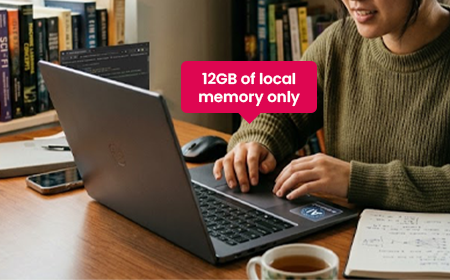
In reality, a recent Omdia report found that 57% of the AI models businesses typically run are lightweight, sub-10-billion parameter models. These don’t need a data centre; they need just 12GB of local memory. Many laptops today can handle that.
2. Apple’s AI masterstroke
The first wave of professional local AI relied on NVIDIA’s traditional, power-hungry PC graphics cards. It introduced businesses to a highly attractive, fixed-cost model: buy or lease the machine, and your local AI processing is essentially free.
But these devices had a hidden traffic jam: data had to shuffle slowly back and forth between separate memory pools, slowing everything down.
Apple got rid of that traffic jam entirely. Their chips share one big pool of memory instead of splitting it into separate pockets – so nothing has to wait in line.
The result: a 128GB MacBook Pro can run seriously powerful AI models (the kind that used to need a data centre) completely offline, right at your desk.
3. NVIDIA responds – and AMD enters the ring
NVIDIA went all-in on power, launching RTX Spark to bring that same kind of on-device AI muscle to everyday Windows laptops.
At the same time, AMD used its Halo platform to deliver powerful local AI performance without the extreme heat, power bills or high costs of a dedicated graphics card setup. AMD setups are generally more affordable too – making them the ultimate setup for department-wide rollouts.
The golden age of on-device AI
You no longer have to pick a side between a sleek macOS setup or the open flexibility of Windows to get absolute privacy and predictable costs.
The best options right now mean matching the right tool to the job:
The memory powerhouse: Apple’s MacBook Pro and Mac Studio dominate for raw internal memory capacity, giving you the headroom to run serious local AI models entirely in memory – no data centre required.
The specialist workhorses: High-end Windows desktops packed with NVIDIA graphics cards offer unmatched performance and the industry-standard software support that technical creators demand.
The fleet enablers:Ultra-portable laptops powered by AMD Halo chips give you the perfect mix of local AI speed, low power consumption and all-day battery life – with costs as much as 20% cheaper than competing options.
While many tasks can now run entirely on-device, having cloud “waiting in the wings” makes sense for all kinds of business.
Many operating systems are now smart enough to distribute workloads automatically. Your local hardware handles day-to-day work for free – and seamlessly taps into secure cloud servers only when you need the extra muscle for complex projects.
Why it works: 128GB shatters standard PC graphics bottlenecks, allowing developers to load advanced 70B and 122B parameter models natively into memory for near-instant code reviews.
Cloud reliance: Optional. Handles the vast majority of core engineering pipelines privately at the desk.
The professional services firm (up to 50 people)
The profile: Legal, financial or recruitment firms where data privacy is paramount and deep client archives must be instantly searchable 24/7.
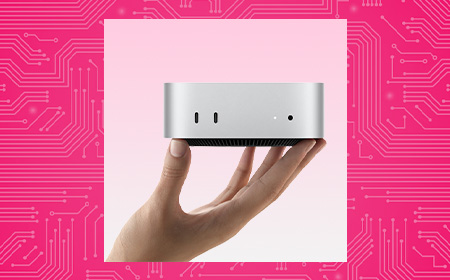
The hardware: Standard staff laptops supported by a fleet of Mac minis acting as “AI agent hubs”.
Why it works: The Mac mini is a silent, low-power background worker. In real-world enterprise rollouts, Apple reports that one customer cut three-year total cost of ownership by over half and energy consumption by 78% after migrating from cloud-based AI to local Mac minis.
Cloud reliance: Yes. Local hubs handle daily sorting securely behind your firewall, tapping the cloud only for heavy, cross-archive analysis.
How can we help?
Set up a 15-minute call with a HardSoft AI expert to find a leasing plan that works for you.
AI FAQs
Is running AI locally actually as good as using the cloud? For what your team does day-to-day, yes. In fact, running open-weight models (like Phi-4 or Llama 3.1 8B) locally is often much faster because you bypass internet delays and busy cloud servers.
What about data security? This is the single biggest win for small firms. When you run AI right on your own devices, data never leaves the machine. What stays on your computer cannot be leaked.
Isn’t the upfront cost of AI hardware too high for a small budget? It is a large upfront CapEx if you buy out of the box. That is why many businesses choose to lease.
The Business Guide to On-Device AI: How to Cut the Cloud Cord in 2026
Cloud AI bills are spiraling. New laptops and desktops now run powerful AI right on your team’s machines — cutting costs, locking down data and killing the monthly meter. Here’s how to build the right AI setup for your business.
Quick Summary
If you’ve spent the last two years watching your team test-drive AI tools, you’ve probably noticed two things: it’s incredibly powerful, and your cloud bills are becoming weirdly expensive.
In 2026, businesses are realising that sending every single prompt to a distant data centre is slow, pricey and a compliance minefield. That’s why the tide is turning toward AI independence — running powerful AI models directly on the laptops and desktops your team uses every day.
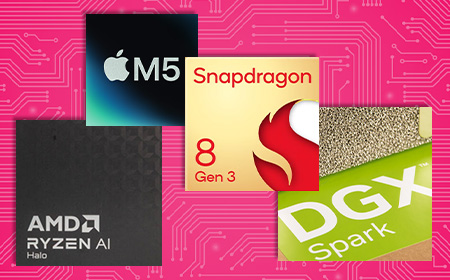
This guide pulls together everything you need to know: why businesses are switching, who’s building the best AI hardware right now (Apple, NVIDIA and AMD have all thrown their hats in), and exactly which setup fits your team.
We’ve been kitting out UK businesses for 40 years, so these aren’t generic picks — they’re the machines we actually put on people’s desks.
Let’s clear up the jargon, because three very different things get lumped together.
Consumer cloud AI is opening a browser to ask ChatGPT or Gemini a quick question. Handy, but a standalone service — not part of your core IT.
Enterprise cloud AI is the corporate platforms and background automations that rent processing power from distant data centres. This is where the costs live.
True on-device AI means the actual language models are installed and executed entirely within your physical hardware. If a tool needs an active internet connection to function, it isn’t on-device.
That last one is the game-changer — and it’s finally practical for everyday business machines.
The “Cloud Hangover”: Why Businesses Are Switching
The honeymoon period with cloud-based AI is ending. According to recent market data, a staggering 91% of enterprise IT leaders report significant issues with their cloud AI partnerships — citing data security, cost and disappointing performance. A pivot toward on-device AI tackles three headaches:
The “experimentation tax.” In the cloud, every time you ask AI to “summarise this report” or “fix this code,” a meter runs. These are inference costs — the price of the AI actually doing the work — and they’re wildly unpredictable as more staff pile in.
The privacy paradox. To use cloud AI, you send your data to a third party. Even with “enterprise” protections, 76% of organisations worry about data leakage. If you handle proprietary designs or sensitive client info, risk mitigation isn’t enough — you need risk elimination.
The visibility gap. It’s easy to track a monthly SaaS bill. It’s much harder to see the hidden costs — the hours your technical teams burn on security reviews and compliance paperwork just to get a project over the line.
Local AI also simply feels faster. There’s no internet round trip to a remote data centre, so responses often begin almost immediately.
The Privacy Advantage
At HardSoft, we talk a lot about architectural privacy. It sounds technical, but it’s dead simple: data that never leaves your computer cannot be leaked.
Run AI locally and your customer data, codebases and internal research stay behind your firewall. You can pull the internet cable out of the wall and everything still works — because all the capability and data is on your machine. No 20-page Data Processing Agreement required, because the data isn’t going anywhere.
In regulated sectors like healthcare, finance and law, where data sovereignty is a legal requirement rather than a nice-to-have, that’s enormous.
Understanding the “10 Billion Rule”
“Surely my laptop isn’t powerful enough to run a ‘real’ AI?” In 2024, you’d have been right. In 2026, you’re likely wrong.
One of the biggest myths is that you need a massive, trillion-parameter cloud model for everyday tasks. In reality, 57% of the AI tasks businesses run rely on lightweight models with fewer than 10 billion parameters — the ones handling routine data formatting, file indexing and document summaries.
Here’s the catch: most companies are still renting cloud space to run these lightweight models, racking up needless API bills. You’re paying for the big daddy but getting a (more than capable) minnow to do the work.
A 10-billion-parameter model doesn’t need a data centre. It only needs around 12GB of memory to run well, because modern AI formats shrink big models so they run locally without a noticeable drop in quality (it’s called quantisation, if you’re curious). Most high-end business laptops today handle this with ease.
Jargon alert — “parameters.” Think of these as the brain cells of an AI. The headline-grabbing models have trillions, but an AI with 10 billion cells is more than smart enough for conversational AI, complex summarisation and even advanced coding assistance.
The Contenders: Apple vs NVIDIA vs AMD
The best news for business? This is no longer a one-horse race. In just eight short months the market has completely transformed, and there’s now an AI-ready machine tailored to every role in your company.
Apple: the unified memory long game
It’s a common misconception that Apple jumped on the AI bandwagon. In fact, the company started baking “neural engines” — parts dedicated purely to AI — into its chips back in 2017. Every lesson learned went into the M-series processors that power today’s MacBooks, where the CPU, GPU and Neural Engine all work together.
Apple’s secret weapon is Unified Memory Architecture (UMA). In a traditional PC, the processor and the graphics card have separate pools of memory, and shuttling data between them creates a bottleneck. Apple gave the whole chip one massive, shared, high-speed reservoir instead. That’s why a 128GB MacBook Pro can run a 70-billion-parameter model with ease — no cloud required. Need to go bigger? The Mac Studio, with up to 512GB of unified memory, chews through models over 100 billion parameters right at your desk.
This isn’t “toy model” territory, either. Forward-thinking firms are now running massive open-weight models locally with output quality practically indistinguishable from top-tier cloud models — at zero per-token cost and with absolute privacy.
The Mac mini as a 24/7 “AI agent hub”
One of the most interesting trends of 2026 is the humble Mac mini as an “AI agent hub” — a small, quiet, low-power machine running background AI 24/7, organising files and monitoring data while you sleep. Under the latest macOS you can even daisy-chain several together into a private AI supercomputer in the corner of the office. For some firms, moving routine tasks off the cloud and onto local minis has cut total cost of ownership by more than 50%.
Bonus: Apple’s Private Cloud Compute handles the occasional oversized task on secure Apple Silicon servers without retaining your data afterwards — and it’s included natively in Apple Intelligence, no extra token fees.
NVIDIA: raw power and universal compatibility
NVIDIA took the early crown by dropping powerful discrete GPUs straight into Windows workstations, letting businesses stop paying per-token cloud fees and start running models in-house. And it isn’t backing down.
Interestingly, 56% of organisations using Macs for local AI also deploy NVIDIA hardware — they’re not switching teams, they’re building hybrid fleets to get the best of both.
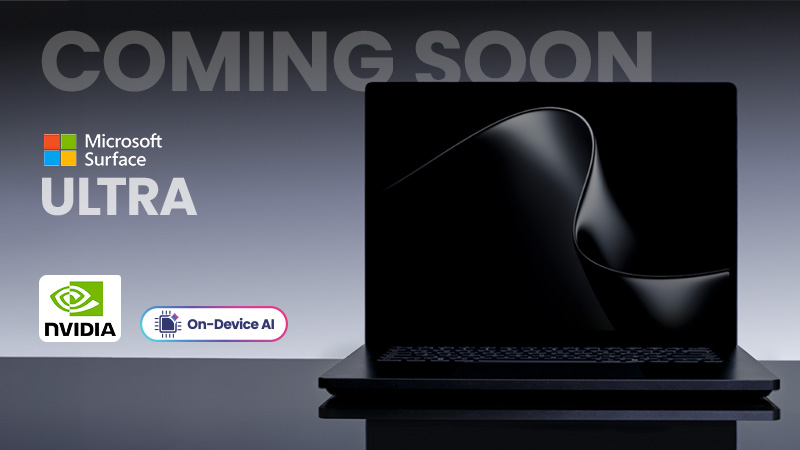
NVIDIA’s real trump card is compatibility: because most of the world’s AI software is built for its tech, technical teams prefer it for heavy-duty projects. It’s also pushed into mobile with the RTX Spark platform, powering AI-ready Windows laptops like the Surface Laptop Ultra.
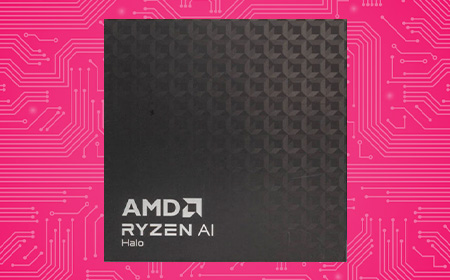
The biggest surprise of 2026 has been the rapid rise of AMD. Rather than chase the biggest, most power-hungry chip, AMD built a brilliant middle ground: significantly more AI performance than a standard office laptop, but without the heat, noise and eye-watering energy bills of a top-tier rig.
Its new Halo chip lineup launches at roughly 20% cheaper than competing NVIDIA options — which makes AMD-powered devices ideal for wide-scale company rollouts, not just a treat for the developers.
It lets whole teams effortlessly run the 57% of everyday AI tasks that don’t need a massive, expensive tech stack.
Cloud vs Local: Where Do Your Tools Actually Run?
To build a smart hardware strategy, you need to know which tools need the internet and which run entirely offline.
The full model files sit on your hardware and process data entirely offline, behind your firewall, with total privacy.
The 2026 rule of thumb: use cloud platforms for massive, creative or web-scale research where data sensitivity isn’t a barrier. For routine automation, private company data and 24/7 background agents, run open-weight models locally on your leased hardware to kill subscription costs and guarantee privacy.
Jargon alert — “open-weight model.” Standard cloud AI keeps its system locked away behind an internet wall. An open-weight model hands you the finished, fully trained settings so you can run it 100% offline with total privacy.
Match the Hardware to Your Team
The smartest businesses right now aren’t just buying “faster computers” — they’re building targeted technology portfolios. Think of the switch you made to Netflix: you didn’t rip the aerial off the roof, you kept the BBC and ITV too.
Here, the cloud is Netflix and your local machines are the trusty aerial. Whatever your team size, the goal is identical: absolute privacy, predictable costs and flawless performance.
Business Type
Recommended Hardware
Why It Works
Cloud Use?
Agile team of 10 — creative, marketing, consulting
Sovereign, high-memory local processing for sensitive R&D
Definitely — for ultra-massive, multi-layered workloads
The strategy today is never about buying the most expensive machine available — it’s about matching the right tool to the job. For raw memory capacity, the Mac Studio and MacBook Pro are hard to beat. For specialist engineering, NVIDIA workstations offer industry-standard software support. For a mobile workforce, AMD ultra-portables and Copilot+ Windows laptops deliver local AI speed with all-day battery.
Is on-device AI really as good as the cloud? For what most businesses do day-to-day, yes — and it’s often faster, because you’re not waiting on a busy cloud server to respond.
Does “on-device” mean we can’t use the cloud at all? Not at all. The future is hybrid. Modern operating systems are smart enough to process everyday tasks locally for free, then tap secure cloud infrastructure only when you need the extra muscle. You get local privacy and infinite cloud scale.
Isn’t the upfront hardware cost too high? You’re trading a never-ending monthly bill for a fixed cost you can manage. Buying outright is a big CapEx hit, though — which is exactly why leasing is so popular (more below).
What about data security? This is the single biggest win. What never leaves your computer cannot be leaked to third-party servers. No complex data agreements, no exposure.
So the future is hybrid? That’s where we’d put our money. On-device AI brings speed, security and savings; cloud AI is your super-sub for when things get heavy.
Leasing AI Supercomputers With HardSoft
Here’s the honest bit: the hardware that makes on-device AI possible isn’t cheap to buy outright. A capable AI workstation runs anywhere from £2,000 to £7,000+, and buying a fleet of them is a serious capital hit. That’s why the shift to local AI and the shift to leasing go hand in hand — you swap unpredictable cloud fees for one fixed, predictable monthly cost.
We’ve spent 40 years helping businesses get the right tech at the right time — from global brands like LG and Levi’s to hundreds of fast-growing smaller firms. It’s IT leasing, reinvented.
Whether you’re kitting out a creative team of ten or building a private AI supercomputer cluster, the question is no longer if your business should run AI locally — it’s where. Explore the full range of NVIDIA-powered supercomputers, Copilot+ PCs and Apple Intelligence machines ready to lease today, and cut the cloud cord for good.
Samsung Galaxy Book6 Compared for Business: Book6 vs Book6 Pro vs Book6 Ultra
This guide compares the three Intel-powered Galaxy Book6 models — the Book6, Book6 Pro and Book6 Ultra — and helps you work out which one is right for your team.
Quick Summary
Samsung has become one of the most interesting Windows laptop brands for business, and the Galaxy Book6 range highlights why.
All three models share a processor generation but differ in screen, ports and headroom: the standard Book6 pairs an IPS panel with 16GB of RAM you can’t upgrade after purchase, the Pro doubles that ceiling to 32GB and adds Wi-Fi 7 and single-cable Thunderbolt 4 docking, and the Ultra adds an RTX GPU for teams requiring dedicated graphics (video, design and 3D work.)
Our pick: the Samsung Galaxy Book6 Pro 14” is the right device for most business teams. Enjoy a 1,000-nit AMOLED touchscreen and 30-hour battery at 1.24kg — leasing from £10.53 per week with a free dock!
What All Three Galaxy Book6 Models Share
Every Galaxy Book6 runs Intel’s latest Core Ultra (Series 3) “Panther Lake” silicon, with an NPU fast enough to qualify all three as Copilot+ PCs — 49 TOPS on the Book6, 50 TOPS on the Pro and Ultra.
On-device AI features run locally rather than sending your data off to the cloud. If your team handles sensitive information, that’s reassuring.
They also share the same dependable basics: a solid aluminium body, a comfortable full-size keyboard, a sharp webcam for video calls, and a fingerprint reader to log in. Plus, multi control lets you work across your phone and tablet from one keyboard.
Best for: admin, reception, field staff — anyone living in Outlook, Teams and a browser.
Processor: Intel Core Ultra 5 325 or Ultra 7 355, with 16GB RAM, a 512GB or 1TB SSD and Intel integrated graphics.
Display: a 14″ or 16″ anti-glare display that’s bright and easy on the eyes in an office. It’s a standard LCD, though — not the richer, more colourful AMOLED screen you get on the Pro.
Ports: 2× USB-C, 2× USB-A, HDMI, microSD, combo jack, Kensington slot and Gigabit Ethernet — one up on the Pro. That RJ45 is worth having for fixed-desk staff or sites with patchy Wi-Fi. Wireless is Wi-Fi 6E, not Wi-Fi 7.
Battery: 24 hours on Samsung’s video playback test. At 14.9mm and 1.74kg, it’s the chunkiest of the three despite being the least powerful.
Trackpad: a mechanical clickpad rather than the Pro’s haptic pad — stiffer near the top edge, less consistent across the surface.
The catch: 16GB is the ceiling, and memory can’t be upgraded after purchase.
Best for: almost everyone. Managers, consultants, developers, sales, finance, hybrid workers.
Processor: Intel Core Ultra 7 356H or Ultra X7 358H with Intel Arc graphics, 16GB or 32GB LPDDR5X RAM and a fast PCIe SSD. Samsung quotes 60% more CPU and 70% more GPU power than the last generation — enough for large datasets, heavy multitasking and light video work, without paying workstation prices.
Display: A 14″ or 16″ AMOLED touchscreen — the same bright, punchy screen technology Samsung puts in its top phones. It’s sharp, colourful and glare-resistant, so it stays clear and readable on a train, in a sunny meeting room, or out at a client’s office.
Battery: 30 hours on Samsung’s video playback test. It’s light too — the 16″ is 11.9mm and 1.59kg, the 14″ 11.6mm and 1.24kg.
Cooling & trackpad: it runs cooler and quieter than the standard Book6, so the fan stays quiet on calls, and the trackpad is the smooth, pressure-sensitive kind that clicks evenly wherever you press.
Ports: 2× Thunderbolt 4, USB-A 3.2, HDMI 2.1, a card reader and a combo jack, plus Wi-Fi 7 and Bluetooth 5.4. HDMI 2.1 drives 8K at 60Hz or 5K at 120Hz, so one cable handles most meeting-room displays without an adapter — and Thunderbolt 4 carries displays, data, network and power to a dock over a single connection.
Both share the same processors, RAM options, AMOLED resolution and ports — so the choice is about how your people work.
Pick the 14″ for anyone on the move. At 1.24kg it’s the lighter travel machine, its battery stretches furthest, it’s cheaper to lease — and it comes with the free i-tec dock, so it turns into a full desk setup the moment it’s back at base.
Pick the 16″ for desk-based staff who value screen space. The larger panel suits spreadsheets, side-by-side windows and long document work, and it steps up to quad speakers (the 14″ runs dual) for clearer conference calls.
Best for: video editors, 3D and CAD users, data scientists, developers compiling large builds.
Processor & graphics: everything the Pro has, plus a powerful dedicated NVIDIA graphics card — the sort video editors and 3D designers rely on — with 32GB of memory and a 1TB drive as standard, on a 16″ AMOLED screen.
Cooling & charging: beefed-up cooling to handle the extra power, better speakers, and the fastest charging in the range — around 65% in half an hour.
Ports: the same as the Pro, with one addition — a full-size SD card slot that photographers and videographers will use every day.
Weight: still slim, but heavier at 1.89kg because of that RTX GPU. An Intel Arc variant drops that to 1.79kg.
The catch: unless your team genuinely edits 4K video, renders 3D or runs heavy AI work, that expensive graphics card mostly sits there unused. Ideal for a handful of specialists; overkill for a whole team.
Buying a fleet of Galaxy Book6 Pros outright is a five-figure capital hit before you’ve even configured a single device. Leasing turns that into a predictable weekly operating cost with no upfront outlay, and lease payments are typically fully tax-deductible — unlike a purchase, where you’re working through capital allowances.
It also solves the awkward question of what to do with ageing kit. Buy it, and it’s yours to deal with for years. Lease it, and there’s a clean way out at the end:
Flexi-Lease — our most popular option. Switch devices, cancel, or own the kit for £1 at the end of term (from just 12 months).
Pure Rental — around 30% cheaper. Switch, cancel, or return and refresh onto new hardware at expiry (after 3 or 5 years).
Devices for Teams — our most flexible option for 50+ users, ideal for fast-growing teams with headcount changes.
For most UK businesses, the Galaxy Book6 Pro is the right device. Professional performance, an outstanding display, Thunderbolt 4 and Wi-Fi 7, all-day battery and Windows 11 Pro security — in a machine light enough that people can work on the go. With the free dock on the 14″, it’s a complete desk-and-travel setup for £10.53 a week per user.